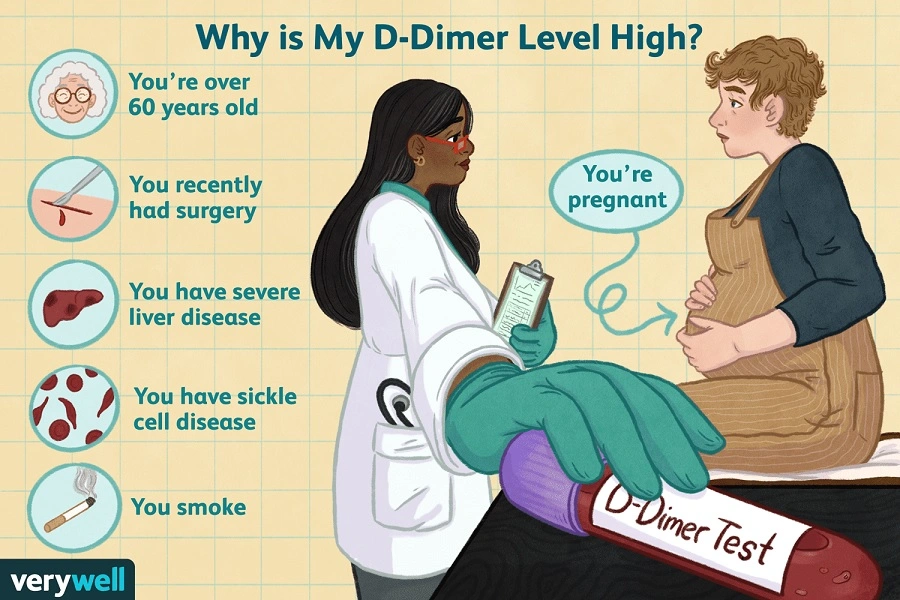
The query What Level of D-Dimer Is Dangerous is normally searched via sufferers and caregivers after blood check outcomes come lower back advanced. D-dimer is a blood marker that allows docs to affirm blood clot formation and breakdown. While a raised D-dimer can sign severe conditions, context matters age, signs, and clinical placing all impact risk.
This complete manual explains what D-dimer is, ordinary vs risky levels, what excessive consequences may also recommend, and while immediate clinical interest is wanted, with all key facts prepared into clean to examine tables.
Table of Contents
What Is D-Dimer?
D-dimer is a protein fragment produced even as a blood clot dissolves inside the body. Under everyday instances, D-dimer tiers are low or undetectable. Elevated levels endorse that the frame has fashioned and is breaking down clots from time to time usually (after surgical treatment), sometimes dangerously (as in thrombosis).
Why Doctors Order a D-Dimer Test
- To help rule out deep vein thrombosis (DVT)
- To have a look at danger of pulmonary embolism (PE)
- To assist evaluation of disseminated intravascular coagulation (DIC)
- To beneficial useful resource choice making in COVID-19 and severe infections
Normal D-Dimer Range
Understanding the everyday variety is essential earlier than asking what level of d-dimer is dangerous.
Standard Reference Ranges
| Measurement Unit | Normal Range |
|---|---|
| ng/mL (FEU) | < 500 ng/mL |
| µg/mL (FEU) | < 0.5 µg/mL |
Important: Laboratories may moreover use outstanding gadgets or cutoffs. Always compare your stop end result to the reference range on your record.
What Level of D-Dimer Is Dangerous?
There is no single typical “risk” number, however higher degrees significantly boom venture particularly whilst paired with signs and signs.
D-Dimer Levels and Risk Interpretation
| D-Dimer Level (FEU) | Clinical Meaning |
|---|---|
| < 500 ng/mL | Normal / low risk |
| 500–1,000 ng/mL | Mildly elevated; may occur with age, infection, pregnancy |
| 1,000–2,000 ng/mL | Moderately elevated; requires clinical correlation |
| > 2,000 ng/mL | High risk; possible serious clotting condition |
| > 5,000 ng/mL | Potentially dangerous; urgent evaluation often required |
➡️ In sensible terms, what level of d-dimer is dangerous regularly starts at > 2,000 ng/mL, in particular with symptoms like chest pain or shortness of breath.
Symptoms That Make a High D-Dimer Dangerous
An amount by myself doesn’t diagnose sickness however symptoms + stepped forward D-dimer can indicate urgency.
Warning Symptoms to Watch For
- Sudden shortness of breath
- Chest ache (worse with respiratory)
- Leg swelling, pain, or redness
- Rapid heartbeat
- Unexplained fainting
- Severe bleeding or bruising
If the symptoms rise up with an excessive D-dimer, attempting to find right now hospital treatment.
Common Causes of Elevated D-Dimer
Elevated D-dimer does not usually mean a blood clot, that’s why doctors interpret consequences cautiously.
Conditions That Can Raise D-Dimer
| Condition | Explanation |
|---|---|
| DVT (Deep Vein Thrombosis) | Clot in deep leg veins |
| Pulmonary Embolism (PE) | Clot traveling to lungs |
| Recent Surgery or Trauma | Normal clot formation during healing |
| Pregnancy | Physiological increase |
| Infection or Sepsis | Inflammatory clot activation |
| Cancer | Increased clotting tendency |
| COVID-19 | Known to raise D-dimer significantly |
| Liver Disease | Impaired clot breakdown |
| Advanced Age | Baseline levels may rise |
Age Adjusted D-Dimer Levels
Age matters while asking what degree of d-dimer is unstable.
Age Adjusted Formula
- Age × 10 ng/mL (for patients over 50 years)
Example:
- A 70-twelve months antique affected person → top limit ≈ 700 ng/mL
This adjustment facilitates reducing false positives in older adults.
D-Dimer in COVID-19 Why Levels Matter
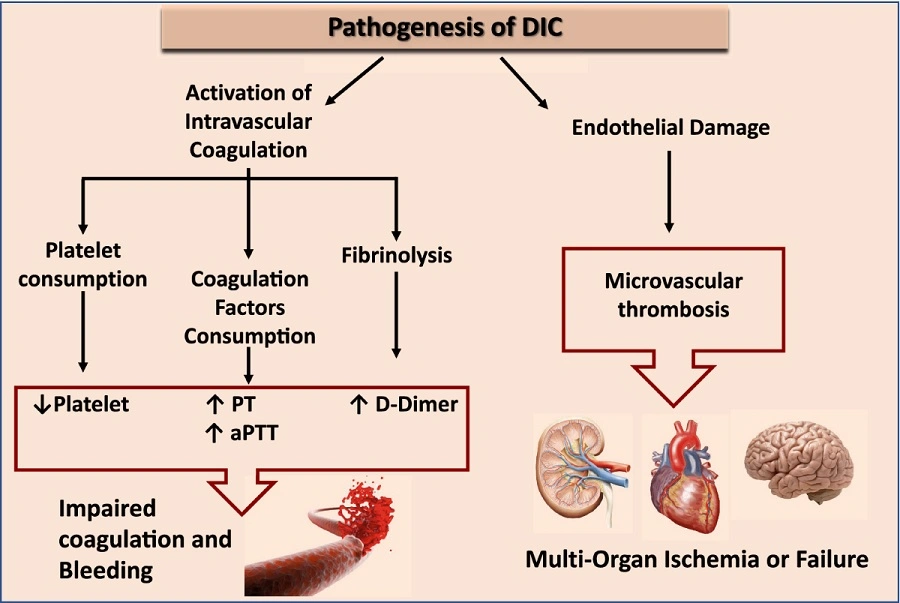
During COVID-19, D-dimer received attention due to the fact very high ranges have been related to immoderate ailment and complications.
COVID-Related Interpretation
| D-Dimer Level | Clinical Concern |
|---|---|
| < 1,000 ng/mL | Mild to moderate illness |
| 1,000–3,000 ng/mL | Increased clot risk |
| > 3,000 ng/mL | Severe disease, ICU risk |
| > 5,000 ng/mL | High mortality risk (requires urgent care) |
How Doctors Respond to High D-Dimer Levels
An immoderate result doesn’t routinely imply treatment—it turns on a similar assessment.
Next Steps May Include
- Imaging assessments (CT pulmonary angiography, Doppler ultrasound)
- Repeat blood exams
- Clinical scoring structures (Wells rating)
- Anticoagulant remedy if a clot is confirmed
Can D-Dimer Be Falsely Elevated?
Yes. That’s why the question of what stage of d-dimer is volatile has to be answered in context.
Common False Elevation Factors
- Recent surgical operation
- Minor infections
- Pregnancy
- Inflammation
- Liver disorder
When Should You Worry About D-Dimer Levels?
Seek Immediate Care If:
- D-dimer is > 2,000 ng/mL and symptoms are gift
- Levels are > 5,000 ng/mL, even without easy signs
- There is unexpected chest ache or respiration hassle
How to Lower D-Dimer Levels (When Appropriate)
Lowering D-dimer method treating the underlying reason, not the huge range itself.
Medical & Lifestyle Approaches
- Treat confirmed clots with anticoagulants
- Manage infections or infection
- Stay hydrated and cell
- Follow clinical advice positioned up-surgical procedure
- Control chronic conditions
Never self-medicate blood thinners without clinical supervision.
Summary Table What Level of D-Dimer Is Dangerous
| Aspect | Key Information |
|---|---|
| Normal Range | < 500 ng/mL (FEU) |
| Mild Elevation | 500–1,000 ng/mL |
| Moderate Risk | 1,000–2,000 ng/mL |
| Dangerous Level | > 2,000 ng/mL |
| Critical Level | > 5,000 ng/mL |
| Key Action | Evaluate with symptoms & imaging |
Conclusion
So, what level of d-dimer is dangerous? While there’s no unmarried cutoff, ranges above 2,000 ng/mL enhance severe concern in particular while followed by way of signs and symptoms like chest pain, shortness of breath, or leg swelling. Values exceeding 5,000 ng/mL often require pressing clinical assessment.
D-dimer is an effective screening device, but it has to usually be interpreted alongside scientific findings, age, and imaging results. If you’ve been given increased tiers, try to find a recommendation from a healthcare professional right away.
Main questions to ask About on What Level of D-Dimer Is Dangerous
1. What is a dangerously excessive D-dimer stage?
Ans. Generally, above 2,000 ng/mL is considered, and above 5,000 ng/mL is frequently taken into consideration.
2. Can immoderate D-dimer suggest most cancers?
Ans. It may be expanded in maximum cancers, but it does not now diagnose cancer through itself.
3. Is a D-dimer of one,000 volatile?
Ans. It is moderate to moderately expanded and calls for scientific context, now not panic.
4. Can pressure growth D-dimer degrees?
Ans. Stress by myself typically does no longer, however stress related illness or inflammation can make a contribution.
5. Should I fear if my D-dimer is high however I have no signs and signs and symptoms?
Ans. You need to be seeking advice from a scientific health practitioner, but it’s far a whole lot much less pressing without signs and symptoms.