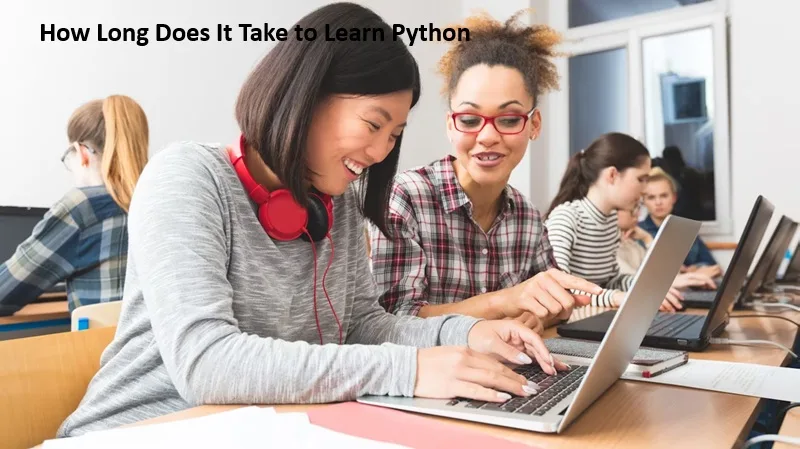
Understanding How Long Does It Take to Learn Python is a commonplace question throughout forums, blogs, and education platforms. Whether you’re a complete newbie or a seasoned coder exploring a new device, gaining readability on realistic timelines helps you place expectations, choose the right learning direction, and live prompt. This article dives deep into real getting to know reviews, professional estimates, and established tactics so that you can confidently chart your Python mastering journey.
Table of Contents
Real User Experiences
Reddit Anecdotes
- One learner shared: “You can learn to use Python in approximately 4 weeks of guided studying. Without a programming history it’ll likely take a year to be suitable enough to ask the proper questions and build something off script.”
- Another noted: “In my case, it became about 6 months earlier than I felt even remotely talented. I could do beneficial things with Python after just a few weeks, but there’s a lot more to writing expert grade code.”
Expert & Platform Estimates
| Source / Platform | Timeline Estimate | Notes & Context |
| BrainStation (2025) | 5–10 weeks (~250 hours full-time) | Fundamentals: syntax, loops, OOP, data types; depends on prior experience |
| Coursera (May 2025) | 2–6 months for basics; minutes to first code | Python for Everybody: ~4 months at 6 h/week; faster with more time |
| Dataquest (July 2025) | Few weeks basics; 4–12 months to job-ready | Based on learners completing Python career paths |
| Interview Kickstart (Feb 2025) | 6 weeks basics; 6–8 months for advanced; 10–12 months for experts | Timeline varies with experience and daily consistency |
| DataCamp (2025) | 1–3 months basics; 4–12 months advanced | E.g., 24 h skill track; career track ~36 h |
Why Timelines Vary
Several factors have an impact on how lengthy does it take to learn Python:
- Prior experience: Knowledge in programming mainly OOP can shorten the gaining knowledge of curves substantially.
- Learning technique: Structured courses (Coursera, Dataquest) frequently accelerate development as compared to solo look at.
- Time committed: Spending forty hours according to week can compress weeks; component-time newcomers might also take months.
- Goals & complexity: Writing a simple script is fast; studying information libraries, internet frameworks, or system getting to know takes longer.
Optimized Learning Approach
- Clarify your desires — Do you want to automate duties, analyze statistics, build internet apps, or get a developer job?
- Learn fundamentals quickly — Avoid memorizing; recognize syntax, features, statistics kinds, manage go with the flow.
- Build tasks straight away — Dataquest stresses that “the real getting to know occurs” when you leap into Dataquest initiatives.
- Use based paths — Coursera’s “Python for Everybody” (~4 months, 6 h/week) or DataCamp’s talent/profession tracks help tempo your getting to know CourseraDataCampIT ProTechRadar.
- Engage the network — Ask questions about Reddit, GitHub, Discord; participating enhances mastering.
- Be constant — Even 1–2 hours day by day beats abnormal bursts; over months, consistency breeds expertise.
Table: Realistic Learning Timeline Estimates
| Learning Goal | Estimated Timeframe |
| Write your first Python script | Minutes to a few hours |
| Learn basic fundamentals | 4–8 weeks (full-time), or 2–6 months (part-time) |
| Becoming “proficient” | 3–6 months with steady effort |
| Job-ready / advanced usage | 6–12 months with projects, libraries |
| Mastery (deep libraries, frameworks) | 12–24 months+ ongoing learning |
Summary
With how long does it take to research Python, novices can assume a few hours to put in writing their first script, weeks to comprehend fundamentals, and months (6–12) to attain process equipped skillability, depending on prior know how, mastering consistency, and dreams.
Final Thought
While timelines vary, Python’s simplicity and abundant resources make it one of the quickest languages to begin constructing with even beginners can write code in hours, however mastery is an adventure of projects, persistence, and practice.
7FAQs On How Long Does It Take to Learn Python
How lengthy to analyze primary Python?
- Approximately 4–8 weeks complete time, or 2–6 months part time relying on effort and sources.
How long will it take to be talented?
- Around 3–6 months with consistent practice and real international initiatives.
What timeframe for activity equipped Python competencies?
- Typically 6 twelve months, along with library ecosystems and carried out projects.
Does earlier programming help?
- Yes, enjoyment with OOP or scripting can lessen the time wished with the aid of several months.
Which learning assets work satisfactory?
- Structured platforms like Coursera, Dataquest, or DataCamp paired with fingers-on practice are simplest.
Is lifelong getting to know required?
- Yes, endless libraries and evolving equipment imply mastery is an ongoing procedure.